Explainer - 11 min read
AMD Earnings Surge: What It Means for You
AMD earnings jumped 45% on data center AI chip demand. Explore what this tech expansion means for your savings, mortgage rates, and retirement investments.
FinStackX Editorial Team ·
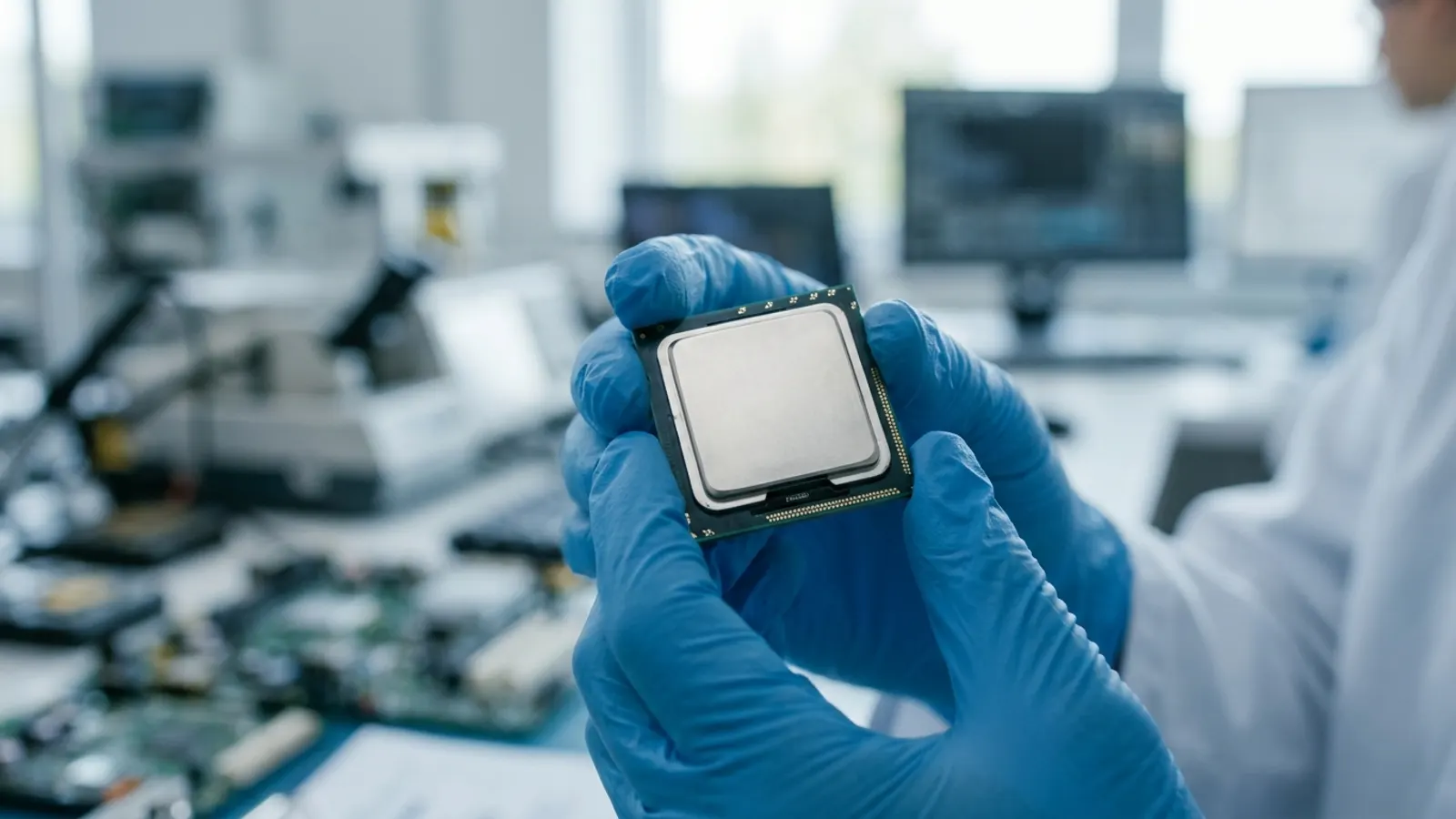
Advanced Micro Devices reported third-quarter 2026 revenue of $13.377 billion, surging roughly 45% year-over-year as demand for artificial intelligence infrastructure doubled its data center business. For households across the United States, the United Kingdom, and Europe, this massive wave of corporate spending is not just a tech headline—it is reshaping borrowing costs, household utility bills, and retirement investment portfolios. Here is what is driving the latest AMD earnings and how the artificial intelligence spending boom affects your personal finances.
What is happening
On November 3, 2026, AMD Investor Relations reported total net revenue of $13.377 billion (commonly cited as $13.38 billion or $13.4 billion) for the third quarter ended September 26, 2026. This marked a 44.7% to 45% increase compared to $9.246 billion in the third quarter of 2025, and a 15.96% sequential increase over the second quarter of 2026.
The top-line beat Wall Street consensus estimates, which varied across reporting outlets:
- $13.08 billion according to Bloomberg
- $13.09 billion according to CNBC and LSEG
- $13.10 billion according to The Wall Street Journal
- $13.13 billion according to Zacks Investment Research
AMD's non-GAAP diluted earnings per share (EPS) hit $2.09, up 74.2% from $1.20 a year earlier, exceeding analyst forecasts of $1.94 to $1.97. Non-GAAP net income rose 76.6% to $3.471 billion. Under GAAP accounting, net income reached $2.428 billion, which included a $1.1 billion non-cash charge tied to the mark-to-market valuation of customer warrant liabilities issued to OpenAI, as reported by The Wall Street Journal via Quartz.
The growth was heavily concentrated in enterprise computing, contrasting with recent volatility seen when other chip stocks tumbled across the sector.
| Segment | Q3 2026 Revenue | YoY Change | Key Performance Drivers |
|---|---|---|---|
| Data Center | $8.546 billion | +96.9% to +97% | Instinct MI450 GPUs and 6th Gen EPYC server CPUs |
| Client (PC) | $2.949 billion | +7.2% | Demand for Ryzen mobile processors |
| Gaming | $773 million | -40.5% | Semi-custom console and discrete graphics cyclical slump |
| Embedded | $1.109 billion | +29.4% | Aerospace, defense, and automotive test markets |
Following the release, AMD's forward guidance for fourth-quarter 2026 projected revenue of $17.0 billion (±3%, or a range of $16.49 billion to $17.51 billion). As highlighted by FourWeekMBA and discussions on Reddit's r/hardware, AMD's quarterly guidance floor of $16.49 billion eclipses Intel's forecasted fourth-quarter revenue ceiling of $16.0 billion. Shares climbed 7.0% to 7.4% in after-hours trading to between $519.49 and $528.80, reported by TradingKey and FXStreet.
Why AMD earnings are surging
The primary catalyst behind AMD's expansion is the rapid commercial rollout of its "Helios" liquid-cooled rack systems. These systems bundle AMD's Instinct MI450 graphics processing units (GPUs) with its 6th Gen EPYC server central processing units (CPUs), code-named "Venice."
Breaking architectural bottlenecks
Major cloud and enterprise operators are seeking alternatives to single-vendor dominance in accelerated computing. According to AMD's official announcements, production workloads on Helios hardware are actively running across Anthropic, Meta Platforms, Microsoft Azure, OpenAI, and Oracle Cloud Infrastructure (OCI Compute E7 instances). Enterprise cloud providers HPE and Vultr have also deployed the architecture for sovereign cloud customers, per Stock Titan.
According to research by Danil Sereda on Seeking Alpha, AMD entered the second half of 2026 with approximately 12 gigawatts (GW) of compute commitments under contract across Tier-1 hyperscale cloud platforms, delivering double-digit billions of dollars per gigawatt.
Free cash flow divergence
Despite rising operating profits, AMD’s third-quarter free cash flow fell 63.8% year-over-year to $554 million, down from $1.530 billion in Q3 2025. Data from Stock Titan shows this divergence stems from substantial working capital investments, including advanced packaging inventories and prepaid wafer capacity to secure cutting-edge semiconductor node manufacturing.
How it affects the economy
The scale of computing investment is influencing macroeconomic trends across the globe, interacting directly with broader monetary factors explored in recent central bank policy debates.
                      +---------------------------------------+
                      |   AI Infrastructure Capex Surge       |
                      |   (AMD, Hyperscalers, Foundries)      |
                      +-------------------+-------------------+
                                          |
         +--------------------------------+--------------------------------+
         |                                                                 |
         v                                                                 v
+-----------------------------+                           +--------------------------------+
| Heavy Corporate Debt        |                           | Industrial Power Demand Leaps  |
| Issuance (e.g., $85B debt)  |                           | (17.8 GW -> 120.3 GW by 2030)  |
+--------------+--------------+                           +---------------+----------------+
               |                                                          |
               v                                                          v
+-----------------------------+                           +--------------------------------+
| Competes with Sovereign     |                           | Grid Transmission Upgrades     |
| Debt (US, UK, Eurozone)     |                           | Passed to Retail Utility Bills |
+--------------+--------------+                           +---------------+----------------+
               |                                                          |
               v                                                          v
+-----------------------------+                           +--------------------------------+
| Benchmark Yields Stay Firm; |                           | Higher Overhead Pressures      |
| Borrowing Costs Anchored    |                           | Household Disposable Budgets   |
+-----------------------------+                           +--------------------------------+
Debt financing and sovereign yields
Tech companies funding massive artificial intelligence deployments are increasingly relying on the bond market. A report by J.P. Morgan Global Markets Strategy highlighted that hyperscale operators have shifted from relying solely on operating cash flows to issuing substantial corporate debt—such as Alphabet raising $85 billion in mid-2026.
This heavy volume of high-grade corporate bonds competes directly for investor capital against sovereign bond issuance in the US, the UK, and Europe. This institutional dynamic adds persistent pressure to 10-year sovereign benchmark yields, presenting a counterweight to broader bond market movements and limiting how rapidly central banks can ease borrowing conditions.
A "two-speed" economic split
In its October 2026 World Economic Outlook update and 2026 Annual Report, the International Monetary Fund (IMF) noted that private-sector AI spending is projected to exceed $2.0 trillion globally in 2026, after contributing 0.5 percentage points to US gross domestic product (GDP) growth in 2025.
However, the IMF warned of an economic divergence: advanced technology manufacturing and software sectors are expanding at double-digit rates, while traditional borrowing-dependent sectors—such as residential building, broad commercial real estate, and automotive lending—face persistent headwind from elevated interest rates.
Capital flows and currency strength
Because the primary intellectual property, design networks, and hyperscale cloud providers powering the hardware transition are predominantly based in the United States, global investment capital continues to flow into dollar-denominated assets. This sustains baseline demand for the US dollar relative to other currencies.
What it means for you
The macroeconomic shifts driven by hyperscale hardware spending filter down to personal balance sheets across regions.
United States
- Mortgages and borrowing: Because 10-year Treasury yields face sustained upward pressure from corporate debt issuance and supply-chain capex, 30-year fixed mortgage rates remain elevated. This maintains the "lock-in" effect for existing homeowners with low-rate loans and keeps monthly payments high for aspiring buyers.
- Utility costs: The Boston Consulting Group (BCG) reported that global data center power capacity will climb from 17.8 GW in 2025 to 120.3 GW by 2030—a total draw 14% higher than Brazil’s historical peak power demand. In high-density data center hubs such as Northern Virginia and Texas, public utility commissions are permitting utilities to pass transmission expansion costs to residential electricity bills through grid-modernization surcharges.
- Consumer electronics: Advanced packaging and memory production lines are heavily prioritizing high-margin enterprise AI silicon over consumer components. Enterprise allocation has caused graphics card and memory bundle prices for retail PC hardware to creep higher heading into the 2026 holiday season, as noted by Digg and VideoCardz.
United Kingdom
- Mortgage refinancing: In the UK, where fixed mortgage terms typically run for 2 to 5 years, higher benchmark debt yields translate directly into steeper remortgaging costs. The Bank of England's neutral policy rate has settled above pre-2022 levels, maintaining elevated monthly payments as older fixed deals expire.
- Critical infrastructure and local grids: In late 2024, the UK designated data centers as Critical National Infrastructure, noted in studies by the OECD. With development heavily concentrated around the London periphery, transmission access constraints are pushing grid-reinforcement fees into household utility bills.
- Workplace pensions: Millions of UK workers enrolled in default workplace pension schemes have gained exposure to the tech run-up through global equity funds that track US mega-cap technology companies.
Europe
- European borrowing rates: As the European Central Bank recalibrates its policy settings higher than historical pre-2022 norms, European borrowers face resets on fixed- and floating-rate home loans, tightening household discretionary cash flow.
- Industrial and household power: European data center development, especially around key hubs such as Ireland, is competing with residential power networks. Transmission operators are investing heavily in network upgrades, which are reflected in local electricity network tariffs.
- Retirement funds: European defined-contribution plans and institutional retirement funds (such as Nordic and Dutch managers) invested in global equity indices have seen portfolio gains driven by semiconductor shares, though fund managers are closely monitoring asset concentration.
How this could play out
The broader economic impact of the AI infrastructure boom will depend on how capital investment converts into real-world business productivity.
Scenario 1: Multi-year expansion continues
If enterprise software adoption expands rapidly, demand for accelerated computing hardware could remain elevated for years. A global study by PwC and Oxford Economics projects cumulative worldwide data center capital expenditures to reach $31.6 trillion through 2050, with annual spending growing from $800 billion in 2026 to $1.1 trillion in 2030.
Unlike previous historical infrastructure cycles where spending declined once foundations were laid, semiconductor systems require upgrades every 4 to 6 years due to thermal wear and rapid chip obsolescence. Under this outcome, analysts such as Vivek Arya at Bank of America (holding a $720 price target, per Beinsure) and analysts at Citi and Aletheia Capital (holding an $800 price target, per TradingKey) view ongoing data center expansion as durable through 2027.
Scenario 2: Overcapacity and digestion phase
If business adoption of AI applications fails to generate revenue matching the scale of hardware investment, cloud providers could reduce hardware orders. A consensus survey on TradingKey revealed a wide spread among Wall Street price targets, spanning from $465 to $1,250. Morgan Stanley analyst Joseph Moore raised his target to $510 with an Equal-weight rating, pointing out that while server CPU demand is strong, hardware vendors face competition from custom internal chips (such as Google TPU and AWS Trainium).
IMF Managing Director Kristalina Georgieva warned that if corporate software monetization falls short by late 2027, the global economy could face equity valuation pullbacks, balance-sheet strain among debt-heavy technology operators, and sudden downward adjustments in bond markets.
What history shows
This dynamic carries parallels to previous technology expansions:
- The telecom buildout (1996–2001): As highlighted by the IMF and The Tech Capital, equipment providers experienced surging revenues as companies laid fiber-optic networks. When real-world data traffic lagged theoretical projections, unlit "dark fiber" led to an over-80% decline in telecom equipment valuations during the 2001–2003 tech downturn.
- The 1920s electrification boom: An IMF economic analysis observed that when electricity transformed factories, substantial capital had to be poured into transmission lines and motors years before aggregate productivity improvements materialized in economic statistics.
What you can do now
Regardless of how market scenarios unfold, you can take practical steps to manage your finances:
- Review retirement asset allocation: If you participate in a US 401(k), a UK workplace pension, or a European personal pension plan invested in market-cap weighted index funds, check your technology exposure. Large tech runs can leave portfolios heavily concentrated in a single sector.
- Maintain cash reserves: With central banks keeping policy rates higher than in the 2010s, high-yield savings accounts and money market funds continue to offer positive nominal yields. Maintaining an emergency fund covering three to six months of expenses can help buffer against fluctuating mortgage resets.
- Audit utility expenses: Because regional grid upgrades are lifting residential electricity bills, look into energy audits, time-of-use rate plans, or efficiency measures to manage household energy overhead.
- Questions for an adviser: If you consult a licensed financial adviser, ask:
- How sensitive is my broader investment portfolio to a sharp pullback in technology infrastructure spending?
- Are my debt holdings matched appropriately against my planned home refinancing or loan reset dates?
- Is my investment portfolio sufficiently diversified across industries outside of technology?
FAQ
Will AMD's data center growth continue at this pace?
Wall Street expectations are divided. While AMD’s fourth-quarter 2026 outlook projects 66% year-over-year revenue growth, analysts from Morgan Stanley note that hardware providers face eventual capacity digestion alongside competition from proprietary in-house accelerators developed by cloud firms.
Why does data center construction affect home electricity bills?
Data centers require extensive power supplies and physical infrastructure. Research by BCG estimates global AI power demand will reach 120.3 GW by 2030. Utility companies frequently fund multi-billion-dollar transmission grid expansions through regulated rate riders that are added directly to residential and commercial customer bills.
Is the AI infrastructure boom creating inflation?
The investment wave acts as a mixed economic force. The IMF noted that while AI investment contributed 0.5 percentage points to US GDP growth in 2025, high demand for power transformers, high-bandwidth memory, and semiconductor packaging keeps specialized industrial supply chains tight. At the same time, massive corporate debt issuance helps keep long-term sovereign bond yields elevated.
How does AMD's performance compare to Intel?
While AMD’s third-quarter revenue stood at $13.377 billion, AMD’s fourth-quarter revenue guidance floor of $16.49 billion exceeds Intel’s forecasted fourth-quarter revenue ceiling of $16.0 billion, according to reports by FourWeekMBA. This marks the first time AMD’s projected quarterly revenue scale has surpassed Intel’s forecast in semiconductor industry history.
Sources
- AMD Investor Relations: Q3 2026 Financial Results
- Quartz: AMD Q3 Earnings Analysis
- Zacks Investment Research: AMD Q3 Metric Breakdown
- TradingKey: AMD Q3 Earnings Report and Cash Flow
- FourWeekMBA: AMD Q4 Guidance Floor Tops Intel Ceiling
- J.P. Morgan Global Markets: AI Capex and Corporate Debt
- Boston Consulting Group: Who Pays for AI Infrastructure?
- International Monetary Fund: 2026 Annual Report on AI Deployment
- PwC & Oxford Economics: Global Data Centre Outlook
- OECD: Securing AI Compute Report
- Stock Titan: AMD 8-K Filing Analysis
This article is for informational purposes only and is not financial advice. Markets move quickly; check live prices before making decisions.