Explainer - 10 min read
Post-Midterm Stock Market Surge: What It Means for You
A post-midterm market surge sent the Dow up over 1,500 points as Democrats swept Congress. Here is what falling yields and oil mean for your finances.
FinStackX Editorial Team ·

Global financial markets surged following the November 2026 U.S. midterm elections after voters delivered majorities for the Democratic Party in both the U.S. Senate and the House of Representatives. For households across the United States, the UK, and Europe, the primary takeaway is that a sudden easing of political uncertainty—combined with tumbling crude oil prices and softer government bond yields—is bringing near-term relief to borrowing benchmarks and fuel costs.
What is happening
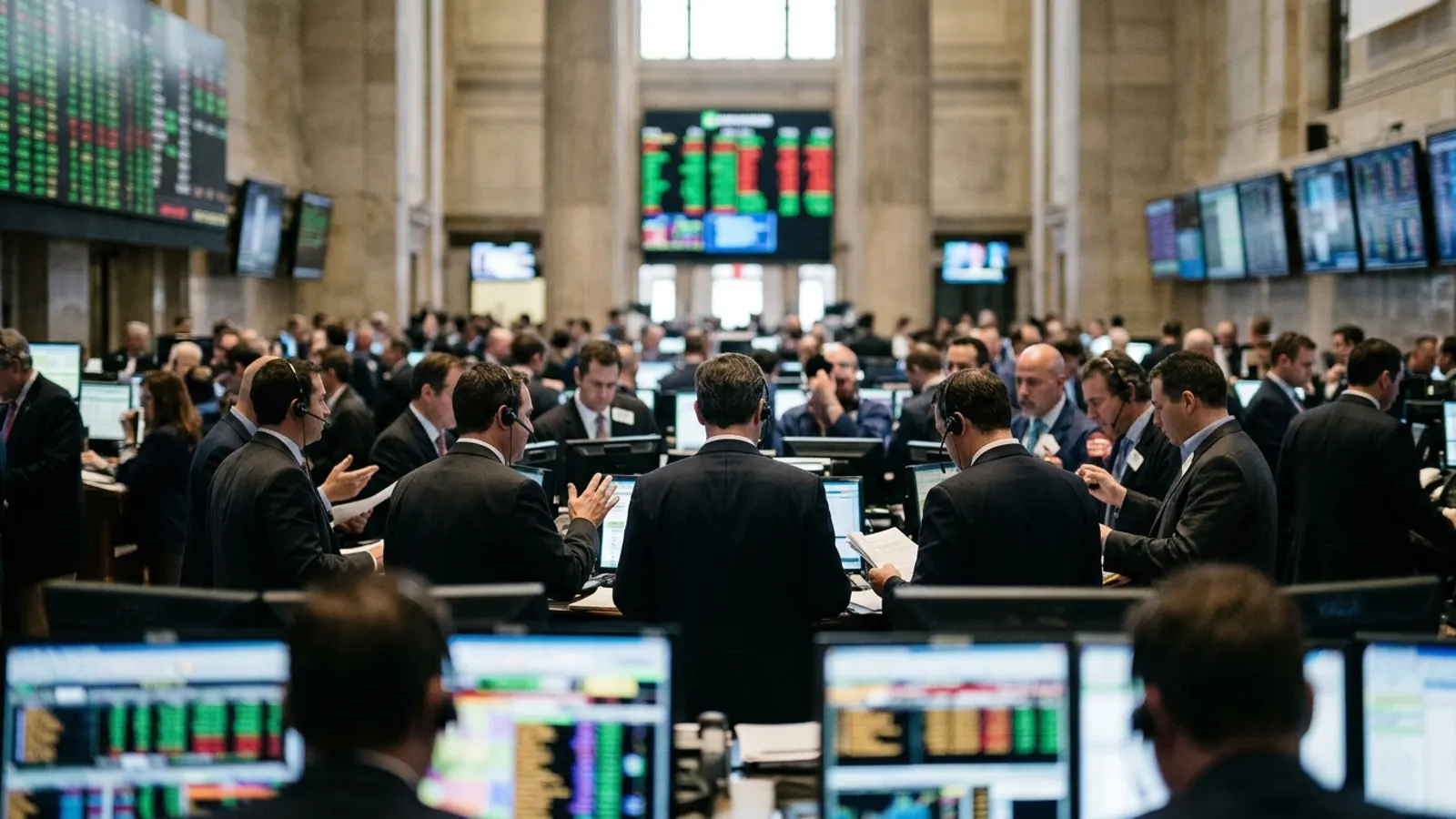
On Wednesday, November 4, 2026, U.S. equity benchmarks experienced one of their strongest single-day post-election performances in decades. According to reports from CNN and Quartz, the Dow Jones Industrial Average surged 1,569.40 points (+3.03%) to close at 53,356.12. Intraday trading saw the index move within a broad band of 52,410.23 to 53,492.40, as documented by The Motley Fool.
Earlier in the afternoon, the Associated Press noted an intraday gain of 1,519 points (+2.9%), while New York State wire reports captured afternoon peaks of 53,485, up 1,511 points (+2.9%), before the index settled at its official closing mark. CBS News characterized the climb as nearly 1,600 points, or 3%. Data compiled from CFRA Research by WTTW confirmed that this marked the Dow's largest post-midterm rally in 44 years, dating back to November 1982, and its best single-day advance since broad reciprocal tariffs were paused on April 9, 2025.
| Index / Asset | Closing Level / Price | Daily Change | Reporting Source |
|---|---|---|---|
| Dow Jones Industrial Average | 53,356.12 | +1,569.40 pts (+3.03%) | Quartz, TheStreet |
| S&P 500 | 7,688.62 | +119.70 pts (+1.58%) | Business Insider |
| Nasdaq Composite | 25,736.51 | +364.50 pts (+1.44%) | Kiplinger |
| Russell 2000 | 2,856.96 | +44.51 pts (+1.58%) | TheStreet |
| CBOE Volatility Index (VIX) | — | -19.8% | NJ Today |
| 10-Year U.S. Treasury Yield | 4.888% | -6.2 bps | Kiplinger |
| WTI Crude Oil | $88.67 / barrel | -7.7% | Kiplinger |
| Brent Crude Oil | $93.47 – $93.60 / barrel | Down to -8% | Mitrade, WION |
| Spot Gold | $3,937.00 / oz | -$18.60 | Stockwatch |
Other major benchmarks advanced in tandem. The S&P 500 closed at 7,688.62, up 119.70 points (+1.58%), which rounded to 7,689 (+1.6%) in reports from Kiplinger. The Nasdaq-100 closed up between +0.81% and +0.90% (28,437.17 to 28,514.80), while the small-cap Russell 2000 rose 1.58% to 2,856.96. Meanwhile, market volatility dropped precipitously: the CBOE Volatility Index (VIX)—often referred to as Wall Street's fear gauge—tumbled 19.8%, though CNN’s Fear & Greed Index remained in "Fear" territory at 26.
Why it is happening
The immediate catalyst for the post-midterm market surge was the removal of election uncertainty, combined with shifts in foreign policy expectations and legislative balance:
1. Re-emergence of Divided Government
Voters granted Democrats majorities in both the Senate and the House. Financial markets often prefer divided government because legislative gridlock acts as a check against sudden regulatory overhauls or aggressive unilateral fiscal expansion. As Tom Essaye, president of Sevens Report Research, observed, divided government offers market stability when underlying consumer spending and employment fundamentals remain solid.
2. Elimination of Post-Election Legal Risks
Markets were bolstered overnight by remarks from President Donald Trump to The New York Times, The Wall Street Journal, and CBS News stating he was "absolutely willing" to accept the election outcome and work cooperatively with incoming Democratic congressional leaders. According to analysis by Generali Investments, these statements removed investor fears regarding prolonged post-election litigation or Department of Justice inquiries. George Saravelos, Global Head of FX Research at Deutsche Bank, noted via The Guardian that this political backdrop helps compress elevated risk premia across asset classes.
3. Repricing of Geopolitical Oil Risk
A notable shift in foreign policy perceptions occurred after Vice President JD Vance posted on X attributing Republican congressional losses to the ongoing war with Iran, as reported by Quartz. The statement triggered swift market speculation regarding an impending military de-escalation, prompting crude oil contracts to tumble between 7.7% and 9.1% intraday.
4. Recalibration of Artificial Intelligence Capital Expenditures
Incoming Democratic officials campaigned on scrutinizing the massive energy consumption of artificial intelligence infrastructure and placing moratoria on data center development. Paradoxically, mega-cap tech hyperscalers rallied sharply. Investors interpreted potential regulatory restraints as an enforced cap on aggressive capital expenditures (capex). As Robert Pavlik, senior portfolio manager at Dakota Wealth Management, explained to Bloomberg via Quartz:
"The market is acting like this represents the end of the AI buildout... the brakes are being applied to their spending, not by the companies, but by the government."
Shares of Amazon gained +8.3%, Microsoft added +7%, Alphabet advanced +5.9%, and Apple rose +6%, collectively adding approximately $1 trillion in market capitalization according to Stocktwits. In contrast, pure-play infrastructure suppliers faced steep declines: CoreWeave plunged -9.9%, Applied Digital fell -6.7%, Tesla lost -3.3%, and Nvidia dropped -3.0%.
For readers following broader technology trends, our explainer on Apple's earnings performance and the recent Anthropic S-1 filing offer additional context on changing industry dynamics.
How it affects the economy
The shift across equities, commodities, and government debt influences several macroeconomic indicators:
- Inflation Pressures: The collapse of WTI to $88.67 per barrel and Brent settling between $93.47 and $93.60—down significantly from previous spikes above $100 caused by Gulf shipping disruptions—will cool headline Consumer Price Index (CPI) projections heading into early 2027.
- Bond Yields & Central Banks: The 10-year Treasury yield dropped 6.2 basis points to 4.888%, while the 2-year yield fell 3.5 basis points to 4.579%, according to Kiplinger. Prior to the vote, markets had priced in a 69% probability of aggressive Federal Reserve monetary tightening, based on estimates from UBS Group. Lower fiscal spending expectations help ease debt supply concerns, as discussed in our analysis of the 10-year Treasury yield's climb toward 4.93%.
- Currency Valuations: The U.S. Dollar Index (DXY) weakened as election risk receded. In foreign exchange markets, the euro climbed to 1.1224–1.1225 against the dollar, the British pound approached 1.3600 resistance, and the Mexican peso advanced due to diminished risks of unilateral tariffs.
- Corporate Performance: Cyclical equities gained ground on soft-landing expectations, with Walmart advancing +3.0% and Bank of America adding +4.0%. Healthcare providers like HCA Healthcare and Molina rallied on expectations that the Affordable Care Act and Medicaid funding will remain intact, while CVS shares tumbled 12.5% following corporate breakup news, according to CNN.
What it means for you
The ripple effects of lower bond yields, falling oil prices, and shifting legislative control vary depending on your location.
United States
- Mortgages and Loans: Benchmark 30-year fixed mortgage rates, which hovered between 6.7% and 7.0% during late summer and autumn 2026, could see downward pressure following the drop in the 10-year Treasury yield to 4.888%.
- Energy Costs: Falling crude oil translates to direct relief at retail fuel stations, easing consumer pain after national gasoline prices approached $5 per gallon in August 2026.
- Retirement Accounts: The broad index rally offered welcome recovery for 401(k) balances after a volatile October, although portfolios heavily concentrated in hardware infrastructure providers like Nvidia saw performance dampened by the capex rotation.
- Consumer Protection: Democratic control of the House of Representatives is expected to revive regulatory efforts aimed at capping credit card interest rates, as reported by CBS News.
United Kingdom
- Pensions and Borrowing: Sterling's advance toward $1.36 against the dollar helps lower the cost of dollar-priced imports. Easing global bond yields also supports UK gilts, improving the stability of defined-benefit pension schemes.
- Household Budgets: While UK mortgage borrowers await the Bank of England's rate decision on November 5, the retreat in Brent crude below $95 per barrel limits the threat of sharp upward adjustments to household domestic energy price caps.
Europe
- Heating and Utility Bills: Brent crude's drop provides cost relief for European households and industrial manufacturers ahead of the winter heating season.
- Investment Accounts: Major European exchanges advanced alongside Wall Street, with France's CAC 40 rising +0.4% to 8,055.02 and Germany's DAX gaining +0.5% to 25,995.13, according to the Associated Press.
- Purchasing Power: A stronger euro (trading above $1.1220) lowers the effective price of crude oil and liquefied natural gas imported in dollars.
How this could play out
Market participants are weighing multiple potential paths as the new political reality takes shape:
Scenario 1: Extended Year-End Rally
Under this outcome, the combination of political gridlock, declining energy costs, and central bank stability fuels a continued seasonal advance. Adam Crisafulli, founder of Vital Knowledge, noted that putting the election in the rearview mirror clears an obstacle ahead of a historically favorable seasonal period for equities. Philip Blancato, chief market strategist at Osaic, stated that the S&P 500 could reach 8,000 by year-end 2026 if political cooperation endures. Keith Parker of UBS Group maintains an S&P 500 year-end price target of 8,100, though he warns that state-level data center regulations remain a tactical hurdle for technology equities.
Scenario 2: Fiscal Brinkmanship and Debt Ceiling Clashes
While legislative division prevents swift tax changes, it also introduces budgetary friction. Stephen Brown, chief North America economist at Capital Economics, cautioned that Democratic congressional gains do not fundamentally alter near-term policy execution because the party lacks a filibuster-proof Senate majority, while the White House retains veto power. Brown warned that upcoming debt-ceiling negotiations could trigger renewed fiscal confrontations. Organizations such as the OECD have similarly urged caution regarding high structural deficits as U.S. federal debt approaches $40 trillion.
Scenario 3: Lingering Geopolitical Volatility
Although markets repriced foreign policy expectations following Vice President Vance's comments, hostilities in the Middle East have not ceased. Jay Woods, chief market strategist at Freedom Capital Markets, pointed out via CNBC that while political relief is palpable, geopolitical conditions in the Middle East and broad executive unpredictability remain significant variables. International bodies, including the International Monetary Fund (IMF) in its October/November 2026 updates, continue to warn that global debt servicing costs and conflict spillovers mean economic resilience cannot be taken for granted.
To learn more about prior market behavior during periods of high geopolitical tension, read our coverage on why Treasury yields fell even as oil surged.
What you can do now
Regardless of short-term market momentum, sound personal finance principles remain consistent:
- Avoid Emotional Market Timing: Large single-day point swings can prompt impulsive moves. Long-term investment plans are designed to withstand political shifts.
- Review Portfolio Diversification: The recent split between mega-cap software hyperscalers and hardware suppliers demonstrates why holding diversified index funds or mixed asset classes protects against single-industry drawdowns.
- Maintain Cash and Emergency Reserves: If lower bond yields translate into softening savings account rates, ensure your cash buffers are positioned to cover near-term household obligations.
- Reassess Debt Obligations: With Treasury yields slipping from autumn peaks, monitor home loan and credit card refinancing terms if financing rates begin to adjust downward.
- Prepare Questions for an Adviser: Ask an authorized, regulated financial professional how shifting legislative policy, energy price fluctuations, and potential changes to federal programs impact your long-term retirement planning.
FAQ
Why do stock markets usually rise after midterm elections?
Historically, markets react positively to the elimination of electoral uncertainty. According to data from CFRA Research, Hennion & Walsh, and The Motley Fool, the S&P 500 has risen in the 12-month period following every single midterm election since 1950, generating an average historical gain of roughly 14% to 15%. However, historical performance does not guarantee future results.
Why did big tech software companies rise while AI hardware stocks fell?
Democratic victories led investors to anticipate tighter state and federal oversight on data center construction and electricity consumption. While this policy shift weighed on hardware and server infrastructure providers like CoreWeave (-9.9%) and Nvidia (-3.0%), investors welcomed the prospect of capped capital spending for mega-cap software operators like Amazon and Microsoft, leading to a rotation in equity valuations.
Will fuel and utility bills drop immediately?
Crude oil contracts tumbled sharply on November 4, with WTI dropping 7.7% to $88.67 and Brent falling to between $93.47 and $93.60. While wholesale energy price changes take several weeks to filter down to retail pumps and consumer utility contracts, the immediate decline relieves pressure on winter utility projections across North America and Europe.
How did the election outcome impact safe-haven assets like gold?
As political tension eased and equities rallied, safe-haven demand decreased. Spot gold slipped $18.60 to $3,937.00 per ounce, as traders unwound defensive hedges.
Sources
- CNN: US Markets Midterm Elections Coverage
- Quartz: Dow Soars as Democratic Midterm Sweep Lifts Markets
- Quartz: Big Tech Stocks Soar on AI Capex Bets
- Kiplinger: Dow Rallies 1,570 Points on Midterm Relief
- TheStreet: Stock Market Today Updates
- Business Insider: Midterm Market Winners and Losers
- The Motley Fool: Dow Jones Historical Trading Range
- The Motley Fool: Historical Post-Midterm S&P 500 Performance
- CBS News: Stocks Soar as Democrats Take Control of Congress
- BNN Bloomberg: World Shares Advance on Congressional Sweep
- The Guardian: Global Market Reaction and Dollar Movement
- WTTW: Dow Has Best Post-Midterm Day in 44 Years
- Mitrade: Daily Currency, Energy, and Commodity Overview
- Stockwatch: Commodity and Gold Market Quotes
This article is for informational purposes only and is not financial advice. Markets move quickly; check live prices before making decisions.