Explainer - 13 min read
Oil Prices Rising: What It Means for You
Crude oil is back above $100 after tanker strikes in the Strait of Hormuz. Here is what oil prices rising means for inflation, mortgages, and bills.
FinStackX Editorial Team ·
International benchmark crude oil surged back above $100 per barrel on Friday, November 6, 2026, as renewed maritime attacks against commercial shipping vessels in the Strait of Hormuz erased early-week optimism about de-escalation. For households and businesses across the United States, the United Kingdom, and Europe, this rapid rebound signals that energy-driven inflation and elevated borrowing costs may persist much longer than financial markets had hoped.
What is happening
Global energy markets reversed course in dramatic fashion at the end of the week. Brent crude futures rebounded by 2.04% to trade at $100.30 per barrel on Friday morning, November 6, 2026, according to PSU Watch and ET CFO. Later in the session, Brent touched an intraday peak of $100.75 per barrel (up 2.5%), rising from Thursday's settlement of $98.29 per barrel, as reported by İlkha.
In the United States, West Texas Intermediate (WTI) crude futures gained between 1.30% and 1.43% on Friday to reach $91.66 to $91.69 per barrel, according to BigGo Finance and TradeArabia. WTI had previously settled on Thursday, November 5, at $90.52 per barrel after plunging 8.3% to $88.12 on Wednesday, November 4, as noted by Oklahoma Energy Today.
The sharp rebound followed an equally aggressive sell-off earlier in the week. On Wednesday, November 4, Brent plunged 8.7% to settle at $94.62 per barrel—its lowest closing price since August 31, 2026, as documented by Investing.com. Even with Friday’s rally, Brent was on track for a weekly loss of approximately 12% to 15%, according to TalkMarkets and ADVFN.
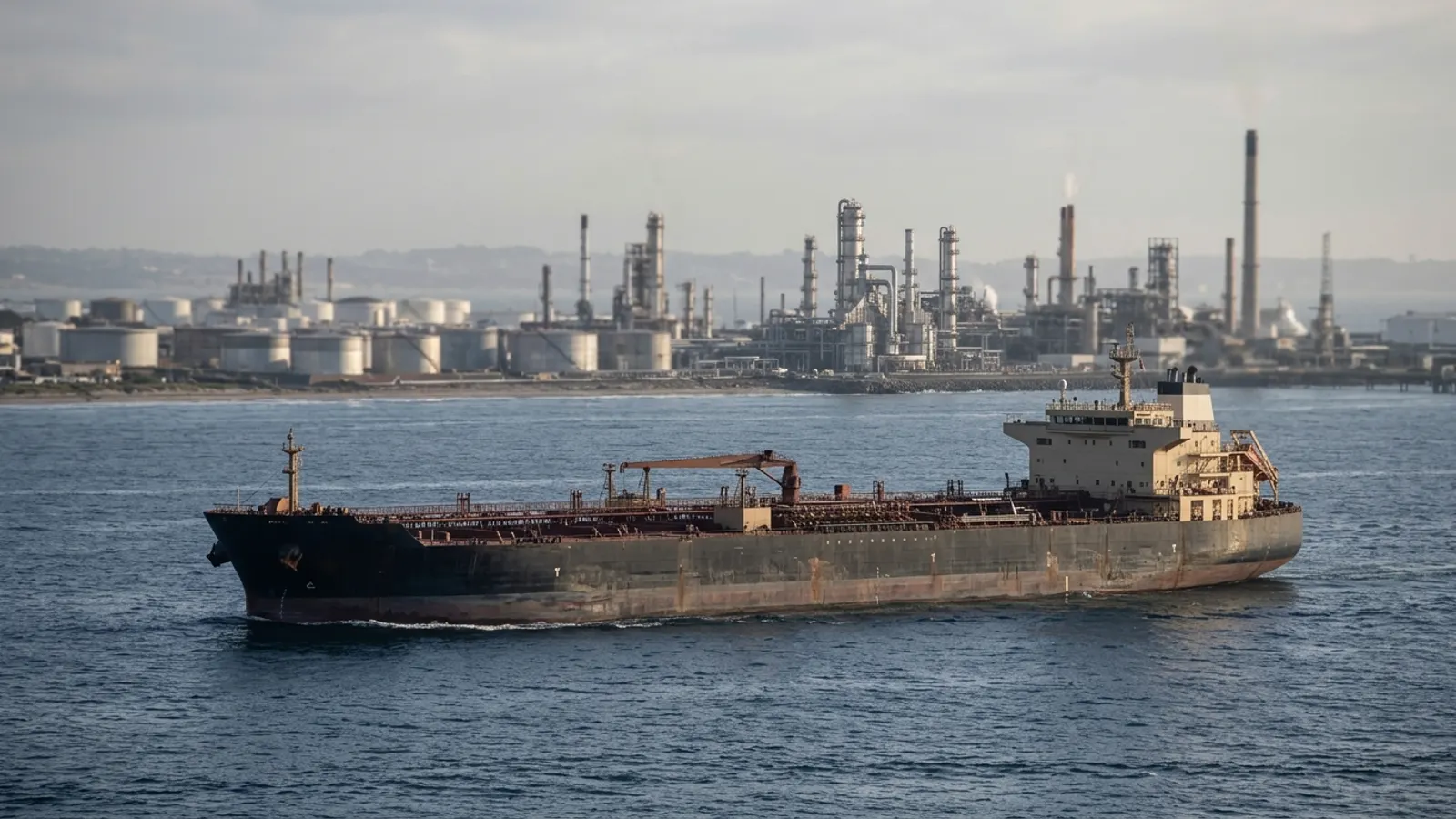
The catalyst for the turnaround was physical danger at sea. UK Maritime Trade Operations (UKMTO) confirmed that at least five vessels suffered security incidents in the Persian Gulf between Sunday, November 1, and Thursday, November 5, 2026. This included a tanker struck by two unidentified projectiles 50 nautical miles north of Madinat ash Shamal, Qatar, reported by TopAsiaFX. Discrepancies exist regarding specific casualty counts: Iranian military sources and the Islamic Revolutionary Guard Corps (IRGC) Navy claimed three commercial vessels (two crude tankers and a tugboat) caught fire or struck sea mines near Oman, while other state-linked outlets reported that up to five vessels had been hit, according to Ynet News and Geopolitical Futures.
Why it is happening: The drivers behind the surge
Understanding why crude markets have whipsawed requires examining the clash between political assumptions and physical maritime choke points.
1. Midterm election assumptions vs. maritime reality
The plunge on Wednesday took place right after the U.S. midterm elections on Tuesday, November 3, 2026. Democrats captured majorities in both chambers of Congress. Energy traders initially bet that newly elected lawmakers would pressure the White House to scale back Operation Epic Fury—the joint U.S.-Israel air and naval campaign launched on February 28, 2026. U.S. Vice President JD Vance publicly highlighted the conflict’s inflationary toll on everyday families as a primary factor in the election outcome, according to TradeArabia.
However, paper market optimism separated quickly from operational realities on the water. Regardless of political pressure in Washington, the IRGC has maintained tactical and asymmetric leverage over the 21-mile-wide Strait of Hormuz.
2. Sea mines and corridor bifurcation
The Strait has effectively split into two contested passages: an Iranian-monitored northern corridor and an allied southern route hugging Oman's Musandam Peninsula. Commercial ships attempting evasive routes or traveling "dark"—turning off their Automatic Identification System (AIS) transponders—have repeatedly struck moored or drifting sea mines, as noted by Jalopnik. UKMTO documented 35 vessel attacks in October 2026 alone, marking the highest monthly tally since the conflict began.
3. Diplomatic bottlenecks
Diplomatic backchannels hosted by Qatar opened on November 5, but negotiations hit an immediate roadblock. Iran’s Supreme National Security Council laid down seven firm prerequisites for opening the Strait. These include an unconditional end to the U.S. naval blockade of Iranian export terminals, lifting economic sanctions, and unfreezing state assets, according to Oklahoma Energy Today. The White House has refused this sequencing, leaving commercial shipping stranded.
4. Severe transit bottlenecks
Normal peacetime crude flows through the Strait run between 20 and 21 million barrels per day (mb/d), making up roughly 20% of global petroleum liquids. Daniel Hynes, senior strategist at ANZ Bank, noted via TalkMarkets that operational capacity remains restricted to below 60%, with merchant tankers forced to navigate in heavily guarded or dark convoys. While partial pipeline diversions across Saudi Arabia and the UAE restored some regional exports to ~15.5 mb/d by October, physical bottlenecks remain acute, according to the U.S. Energy Information Administration (EIA).
How it affects the wider economy
When oil prices rise sharply, the consequences cascade through inflation, interest rates, sovereign debt yields, and currencies across major economies.
| Economic Metric | United States | United Kingdom | Eurozone |
|---|---|---|---|
| Headline Inflation Status | CPI reached 3.8% year-over-year in mid-2026 | BoE projects inflation peaking near 5.0% in 2027 | Warned by ECB as "much more persistent" than 2022 |
| Central Bank Actions | 85% probability of a 25 bps Fed rate hike in 2026 | Bank of England held rates after first hike in nearly 3 years | ECB delivered two rate hikes (June and Sept 2026) |
| Benchmark Bond Yields | 10-year Treasury yield elevated above 4.50%–4.80% | 10-year Gilt yield reached 5.515% (highest since July 2007) | Sovereign borrowing costs under upward pressure |
| Direct Energy Shock Impact | High fuel logistics costs; diesel at $6.33/gallon | Heavy goods vehicles face £350 extra weekly fuel cost | Over €100 billion absorbed in direct energy import costs |
Inflation and monetary policy
Energy serves as a primary input for logistics, agricultural production, and manufacturing. In the United States, headline Consumer Price Index (CPI) inflation had already climbed to 3.8% in mid-2026, according to Luminix AI. With crude back above $100, the risk of secondary inflation waves has surged. CME FedWatch data tracked by Trade Nation shows an 85% probability that the Federal Reserve will implement at least one additional 25-basis-point interest rate increase before the end of 2026.
Across the Atlantic, European Central Bank (ECB) Executive Board member Isabel Schnabel warned in late September that the current shock is broader than in 2022, rapidly spreading from crude into refined middle distillates. The ECB has already enacted two rate increases in 2026. Meanwhile, the Bank of England Monetary Policy Report projected that UK headline inflation could peak near 5.0% in 2027 if energy prices stay high. On Thursday, November 5, the Bank of England held its key policy rate steady after previously executing its first rate hike in nearly three years, reported Newsday and Barchart.
Sovereign bonds, currencies, and global trade
Government borrowing costs have moved sharply higher. Persistent inflation risks pushed the UK 10-year Gilt yield to 5.515%—its highest level since July 2007—according to The Guardian. In the US, benchmark 10-year Treasury yields remained elevated above 4.50%–4.80%.
Currency markets have mirrored these pressures. The U.S. Dollar Index (DXY) rose 0.17% to 101.71 on Friday, November 6, as investors sought safety, according to PSU Watch. A stronger dollar compounds energy costs for developing economies: the Indian Rupee dropped 9 paise to 94.50 per dollar, while UNCTAD reported that developing Asian and African currencies had depreciated on average by 2.3% to 2.9% against the greenback since the expansion of hostilities. Readers tracking global stock reactions can review our analysis on Asia and Europe markets.
Why oil prices are rising: What it means for you
The return of triple-digit crude has concrete effects on everyday budgets, borrowing, and retirement planning. How these pressures play out depends on where you live.
In the United States
- Gasoline and fuel bills: Retail regular gasoline averaged $4.23 per gallon nationally in late October and early November, while commercial diesel hit $6.33 per gallon, based on data from AAA cited by Jalopnik. High diesel prices directly elevate freight surcharges on food and consumer staples.
- Mortgage rates: With 10-year Treasury yields holding above 4.50%–4.80%, 30-year fixed mortgage rates have hovered between 7.0% and 7.5%, constraining home sales and refinancing options.
- Retirement accounts: Equity volatility has weighed on 401(k) and IRA portfolios. Following the elections, the Dow Jones Industrial Average dropped 1,833 points (-3.44%) and the S&P 500 fell 4.36% in early November trading, according to Investing.com, offsetting the yield gains on fixed-income investments.
In the United Kingdom
- Fuel prices and transport: Retail diesel breached £2.00 per liter for the first time in history in October 2026, according to the Confederation of Passenger Transport reported by Forbes. The Road Haulage Association found that hauliers face an added £350 in weekly fuel costs per commercial heavy goods vehicle.
- Government support: Under the UK Autumn Budget delivered on October 28, 2026, the government scheduled a direct £100 cash transfer starting in January 2027 for 20 million households in Council Tax Bands A through D, while extending the 5p fuel duty freeze through July 2027, as detailed by HM Treasury.
- Mortgage resets and pensions: Homeowners refinancing 2-year or 5-year fixed mortgages face rates resetting between 5.5% and 6.2%, squeezing disposable household income. Personal pensions linked to domestic equities have also been challenged by broader market pullbacks, as analyzed by Charles Stanley. For deeper context on monetary responses, see our coverage of the Bank of Canada rate hike.
In Europe
- Supply outages and pump shocks: Physical fuel shortages have emerged. In France, 15% of retail petrol stations experienced severe stockouts of diesel or gasoline by late September 2026, sparking street protests and civil unrest in regional capitals, according to reports compiled on Wikipedia.
- Industrial and domestic power costs: German Chancellor Friedrich Merz stated on October 30 that European economies had collectively absorbed more than €100 billion in direct energy import costs during 2026. Peak-day wholesale electricity prices surged to €314.85 per megawatt-hour (MWh) in Germany on October 29 and €261.76/MWh in Italy, according to AleaSoft Energy Forecasting.
- Pensions and savings: Equity investments in defined-contribution retirement plans took hits as the STOXX Europe 600 and Germany’s DAX recorded their steepest weekly drops since April 2026.
How this could play out
Energy strategists and commodity analysts outline three distinct scenarios for the months ahead. These are modeled scenarios based on specific conditions, not guaranteed outcomes.
Scenario 1: Prolonged maritime conflict and sustained triple-digit oil
Bob McNally, president of Rapidan Energy Group, assigned an 80% probability to sustained military hostilities, projecting in BigGo Finance that both Brent and WTI will hold firmly above $100 per barrel. Under this scenario, the sequencing dispute between Washington and Tehran prevents a diplomatic deal, keeping Hormuz throughput below 60%. ABN AMRO commodity analysts similarly lifted their 2026 average Brent price target by $10 to $96 per barrel in their Global Monthly Report, noting that central banks would remain hawkish to curb inflation expectations. Safe-haven assets could see further inflows; commodity strategists cited by Capital Street FX observed spot gold trading between $4,100 and $4,225 per ounce, with potential to target $4,400 per ounce if attacks spread toward onshore infrastructure such as Yanbu or Abqaiq. Readers can review our earlier analysis of similar volatility in Brent crude oil plunge: what it means for you.
Scenario 2: Continued whipsaw and range-bound volatility
Phil Flynn, senior analyst at The PRICE Futures Group, told Investing.com that the market remains trapped in a volatile whipsaw cycle, swinging sharply within a $10 to $15 band. In this scenario, oil prices alternate rapidly between drops caused by rumors of diplomatic breakthroughs and surges triggered by headline tanker incidents. Daniel Hynes of ANZ Bank noted that while Wednesday's drop below $95 was overdone, crude is likely to oscillate within a elevated risk band of $98 to $105 per barrel while transit security remains unresolved. For another perspective on earlier price surges, see our coverage of when Brent topped $113 after tanker attacks.
Scenario 3: Medium-term glut as supply normalizes in 2027
The official outlook from the U.S. Energy Information Administration (EIA) models a major shift over the next 12 to 14 months. The EIA projects a global supply deficit of 1.34 mb/d in 2026, which it expects to flip into a sizable supply glut of 4.91 mb/d in 2027. Under the EIA's baseline, Brent averages $105 per barrel in the fourth quarter of 2026 before dropping to $74 per barrel by late 2027, assuming Hormuz traffic normalizes early next year and bypass pipelines remain at full capacity.
What historical precedents show
Historical shipping crises offer useful context:
- The Tanker War (1984–1988): During the Iran-Iraq War, between 451 and 546 commercial ships were damaged, according to Law of the Sea studies. The crisis led to U.S. Navy Operation Earnest Will in 1987 to escort reflagged tankers. In 2026, however, the presence of guided anti-ship missiles, drone swarms, and smart sea mines makes naval escorts far more hazardous.
- The 1973 Arab Oil Embargo: OAPEC production cuts quadrupled crude from ~$3 to $12 per barrel, prompting the creation of the International Energy Agency (IEA) and mandatory 90-day emergency reserves. Unlike 1973, Gulf producers in 2026 have not willingly cut off supply; their tankers are physically restricted by hostile actions.
- The 1990 Gulf War: The loss of 4.3 mb/d of Kuwaiti and Iraqi production drove oil to record peaks. While the 2026 transit disruption has seen larger gross volumes compromised (up to 15 mb/d during peak blockade months), robust non-OPEC output—with U.S. shale producing over 13 mb/d—prevented crude from sustaining its April 2026 peak of $126 per barrel, according to the Federal Reserve Bank of New York.
What you can do now
While everyday consumers cannot alter global geopolitical events, practical financial steps can help manage energy price volatility:
- Audit variable transport and energy expenses: With retail fuel at elevated levels ($4.23/gal gasoline in the US; >£2.00/L diesel in the UK), assess driving habits, carpooling options, and home utility consumption.
- Review mortgage and debt structures: Benchmark interest rates remain under upward pressure, with the US 10-year Treasury yield elevated above 4.50%–4.80% and the UK 10-year Gilt at 5.515%. Borrowers approaching fixed-rate mortgage renewals in the UK and Europe should budget for higher monthly payments.
- Check government mitigation measures: UK households in Council Tax Bands A–D should verify their eligibility for the scheduled £100 transfer arriving from January 2027 and factor the 5p fuel duty freeze into near-term transportation budgets.
- Maintain diversified investment portfolios: Large market swings—such as the Dow's 1,833-point decline—demonstrate the danger of reacting emotionally to weekly news headlines. Balancing exposure across equities, fixed income, and cash can help stabilize returns.
- Questions to ask an independent financial adviser: If you work with a regulated professional, consider asking:
- How vulnerable is my retirement portfolio to persistent 4%–5% inflation?
- Should I adjust my fixed-rate borrowing timeline given current bond yield levels?
- Does my portfolio reflect adequate sector diversification during global commodity disruptions?
FAQ
Why did oil prices fall after the U.S. midterms before rebounding?
Crude prices plunged on Wednesday, November 4, following the November 3, 2026, U.S. midterm elections because financial markets bet that Democratic majorities in Congress would pressure the administration to curtail Operation Epic Fury. However, this political assumption was quickly overshadowed on November 5 and 6 when commercial tankers were struck in the Strait of Hormuz, forcing traders to price in immediate maritime shipping hazards.
Is the Strait of Hormuz completely closed to shipping?
No, the Strait is not fully shut down, but traffic is severely curtailed. Operating flows are running below 60% of normal capacity, according to ANZ Bank research. Commercial vessels are largely moving in escorted convoys or navigating dark without AIS transponders to avoid targeting by missiles, drones, and sea mines.
Will high oil prices cause another interest rate hike?
Persistent triple-digit oil prices increase the risk of interest rate hikes by pushing up headline inflation. CME FedWatch data shows an 85% probability that the U.S. Federal Reserve will raise its benchmark rate by 25 basis points before the end of 2026. The Bank of England held its rate on November 5 after an earlier hike, but projects inflation could near 5.0% in 2027 if energy prices remain high.
How much are high energy costs affecting European utility bills?
The impact has been substantial. Peak wholesale power prices reached €314.85/MWh in Germany on October 29 and €261.76/MWh in Italy, according to AleaSoft. German Chancellor Friedrich Merz announced that European nations absorbed more than €100 billion in extra direct energy import costs during 2026 alone.
Sources
- PSU Watch: Rupee Falls as Crude Oil Prices Rise
- ET CFO: Indian Rupee Falls to 94.50 Against US Dollar
- İlkha: Oil Prices Rebound Above $100
- Investing.com: Oil Rebounds After Hormuz Incidents
- TradeArabia: Fresh Tanker Attacks Threaten Hormuz Shipping
- BigGo Finance: Crude Jumps on Gulf Attacks
- TalkMarkets: Oil Prices Today and Weekly Trends
- ADVFN: Crude Oil Rebounds on Middle East Supply Worries
- Oklahoma Energy Today: Fresh Tanker Attacks Prompt Oil Rebound
- The Guardian: Oil Prices and UK Gilt Yield Surges
- Bank of England: Monetary Policy Report November 2026
- HM Treasury: Autumn Budget 2026 Document
- U.S. Energy Information Administration: Short-Term Energy Outlook
- Federal Reserve Bank of New York: The U.S. Oil Sector's Role in Restraining Prices
This article is for informational purposes only and is not financial advice. Markets move quickly; check live prices before making decisions.